U.SAGAYAM IAS
லஞ்சம் தவிர்த்து நெஞ்சம் நிமிர்த்து

ABOUT
- Ubagarampillai Sagayam (born 3 July 1962), usually referred to as U. Sagayam, is a civil servant in the state of Tamil Nadu in southern India, noted for his anti-corruption activities.
-
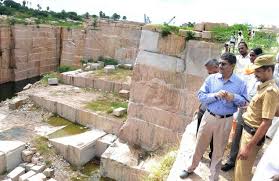
Sagayam, whose office door bears a sign reading "Reject bribes, hold your head high" (in Tamil, Lanjam thavirtthu,nenjam nimirtthu; லஞ்சம் தவிர்த்து நெஞ்சம் நிமிர்த்து), has repeatedly antagonized influential politicians and their supporters in Tamil Nadu. In 2011, he was appointed to oversee state elections in the Madurai district; his strict enforcement of the laws against vote-buying played a role in the change of state government. Beginning in 2012, his investigation of complaints of illegal granite-mining in the Madurai area led to charges against a number of politicians and businesses, including a mining company founded by a scion of one of Madurai's most influential political families.
- Sagayam's efforts to eliminate corruption have led to his reportedly being transferred for 25 times in the first 27 years of his career. They have also won him a reputation for probity; in the words of a DNA correspondent, "[T]he common man's collector has become the hero of the local folklore".
EARLY LIFE & EDUCATION
- Sagayam is the youngest of five sons of a farmer from Perunchunai village, Pudukkottai, Tamil Nadu. He attended a Tamil-medium panchayat elementary school and then a Government Higher secondary school at Ellaippatti. He eventually received master's degrees in social work and in law.

CAREER
-
Sagayam passed the civil service examination, but was not chosen as an officer in the Indian Administrative Service (IAS). He then took the Tamil Nadu Public Service Commission exams; this allowed him to join the IAS in 1991 as subdivisional magistrate of the city of Ootacamund, a.k.a. Ooty. In Ooty, Sagayam became embroiled in a dispute with the district collector, whom he accused of favouritism toward the operators of large tea estates. Sagayam was relieved of his post and transferred to another.
-
By 2000, Sagayam was additional district magistrate in Kanchipuram. There, he closed the Pepsi bottling plant and forbade the sale of its output after dirt was found in several bottles. He also took on the so-called "sand mafia", responsible for unauthorized mining of sand from the bed of the Palar River, a practice that increases erosion and the incidence of flooding. Sagayam ordered a halt to dredging, and declined to rescind his order despite threats of physical violence
-
In 2004, Sagayam, now working as deputy commissioner of civil supplies in Chennai, discovered that subsidized gas cylinders intended for domestic use were being illegally used by restaurants. He confiscated 5000 such cylinders.
- By 2009, Sagayam had been named district collector of the Namakkal district. In that year, he posted details of his personal assets—a bank balance of Rs 7,172 and a house in Madurai, jointly owned with his wife, worth Rs 9 lakh (Rs 900,000)—on the district website. Although this information was on file with the government and thus available for public perusal, Sagayam said, he felt that it should be made more visible to the public. In an interview with the Deccan Herald, he stated that the district collector should set an example of honesty for his subordinates, and that actions like his might tend to rehabilitate the tarnished image of civil servants.
- Sagayam was the first IAS officer in Tamil Nadu to publicize his financial information thus.In Namakkal, Sagayam attempted to reform the village administrative officer (VAO) system.
- He pursued VAOs who lived in cities, far away from the villages that they were charged with overseeing.
- When VAOs and local politicians attempted to have Sagayam transferred, over 5000 villagers protested the transfer attempt, forcing its withdrawal.

MADURAI
- In March 2011, at the behest of the Election Commission of India, Sagayam was named district collector of Madurai district and charged with the task of ensuring that the 2011 Legislative Assembly elections were conducted fairly. Up to that time, Madurai elections had been controlled by M. K. Alagiri, son of DMK party leader M. Karunanidhi. DMK victories had been assured by the purchase of votes with money and gifts. Sagayam arrived in the state 20 days before voting commenced. He staged a campaign to educate voters about the law, and to urge them to reject proffered bribes; he also stepped up efforts to detect vote-buying, and confiscated Rs 20 lakh (Rs 2,000,000) intended for distribution to voters. Sagayam was twice burned in effigy by DMK loyalists; and two cases were filed against him accusing him of favouring rival party AIADMK, both of which were dismissed. AIADMK won the election, and Sagayam was commended by India's chief election commissioner for his work on the election.
-
In September 2011, Sagayam again found himself opposed to Alagiri. In constructing a family-owned engineering college near Madurai, Alagiri and family members had purportedly destroyed irrigation canals used by hundreds of impecunious farmers. Sagayam issued a "strongly worded summons" to Alagari and his wife and son, forcing him to come before a court and explain why action should not be taken against them.